What is a cold call script, and how do you write one that works?
A cold call script is a flexible framework that tells a rep what to say, and when, on a call with someone who was not expecting them. Its job is not to sell, it is to book the meeting. And the best script is not the one you read word for word, it is the one you have internalised enough to drop the moment the prospect goes off it.
What is a cold call script, and what is it for?
A cold call script is the set of lines a rep prepares before dialling a prospect who has no prior relationship with them, so the call becomes a structured conversation instead of an improvisation. It covers the opener, a few questions, the answers to the objections you always hear, and the ask. Its single goal is to book a meeting, not to close a deal on the phone.
And it is a framework, not a teleprompter. Read word for word, any script sounds robotic and dies on the first real reaction. Internalised as a set of beats you can move through in any order, it gives a rep direction when they need it and the freedom to actually talk.
What makes a cold call script actually work?
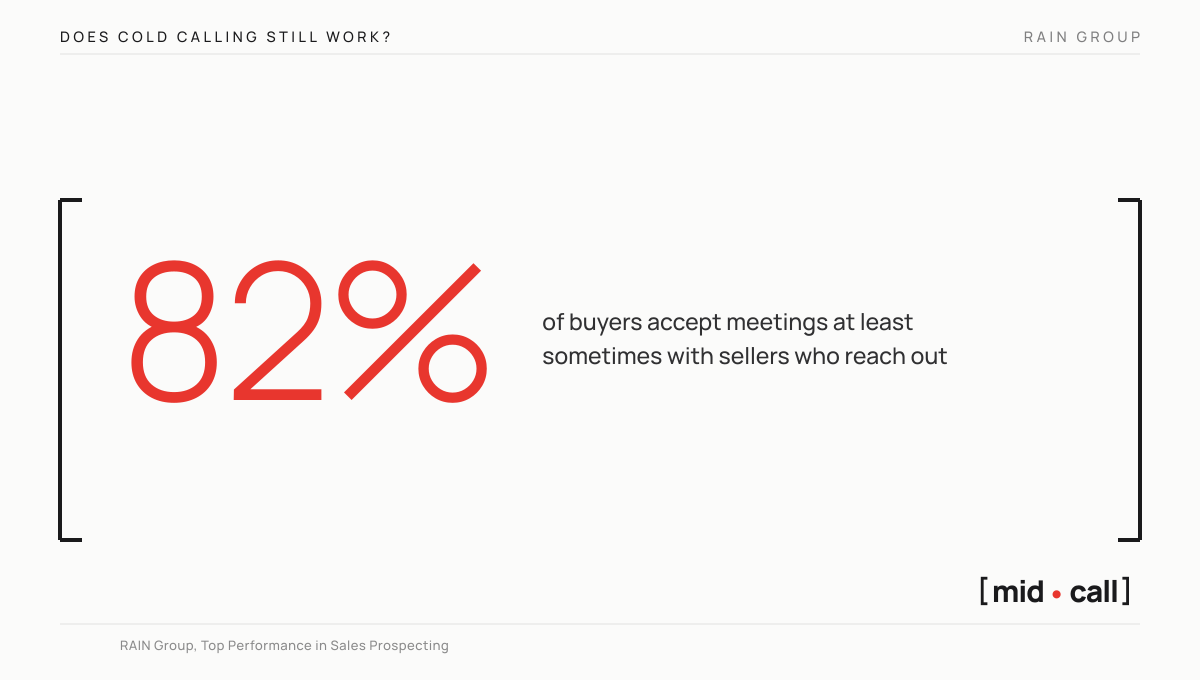
Done right, cold calling still opens doors. In RAIN Group's prospecting benchmark research, 82% of buyers said they accept meetings at least sometimes with sellers who reach out to them. The catch is in the execution, and a script that works shares the same handful of beats.
It opens by owning the interruption, with a reason for the call a prospect can grasp in one sentence. It asks open questions that get the prospect talking about themselves before anything is pitched. It has a ready answer for the three or four objections you hear on every call. And it closes on a clear ask with a concrete slot, a day and a time, never the limp "does this sound interesting?". Underneath all of it the language is short, spoken and concrete, the sentences stay under fifteen words, and the prospect, not the product, is the hero.
What does a cold call script look like, block by block?
Here is the structure that holds, whatever you sell.
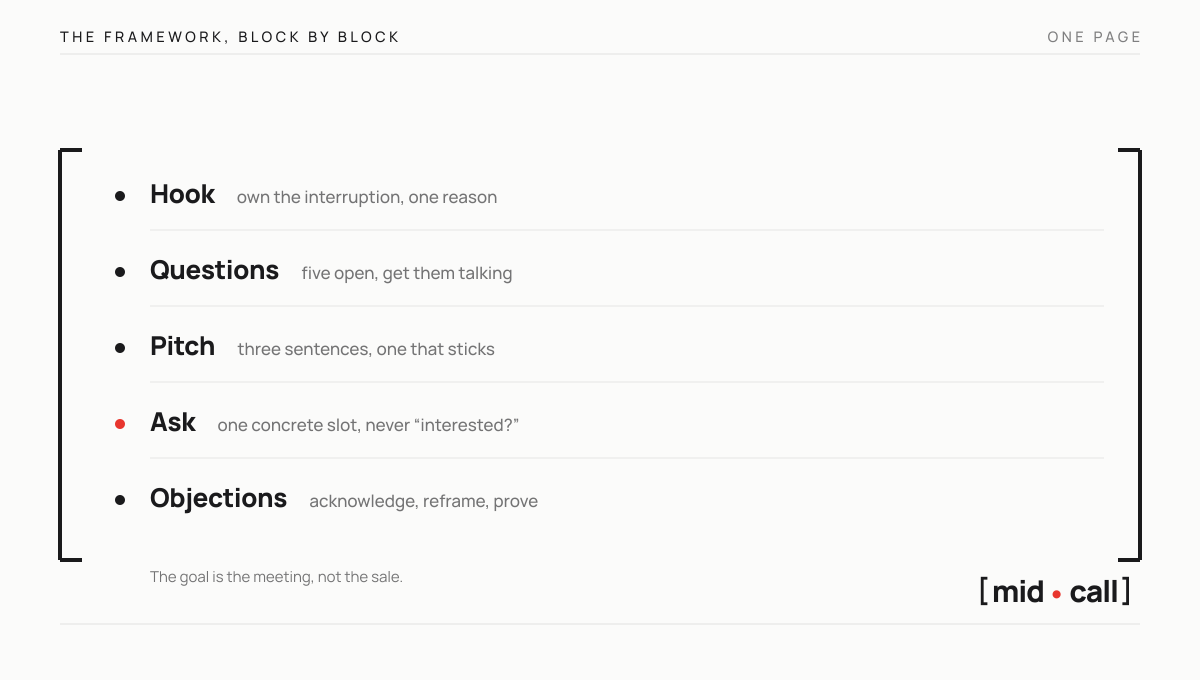
The hook, three lines at most. One to say who you are, one proof point with a number, and one plain-language line or analogy that makes the value obvious, ending on a short question that earns you the next thirty seconds. Keep one line ready for the gatekeeper, a legitimate reason and a request for the right person, nothing more.
The questions, around five, all open. What they do today, how mature they are on the thing you sell, what their own customers expect, and one that surfaces their main objection before it lands. You are not interrogating, you are showing you understand their world, which is also the heart of a good discovery.
The pitch, three sentences a child could follow. What you actually do, who does the work, what they get, closed with one line that sticks.
The ask, on its own. Minimise the commitment, say who runs the meeting, and propose one precise slot. A specific time gets a yes or a no. "Are you interested?" gets nothing.
The objections, five to seven you actually hear. Acknowledge, reframe as a question, bring a proof point, and keep the date out of it, the ask already did that job. The price objection rarely belongs on a cold call, so park it toward the meeting rather than debating it on the phone.
Here is what that looks like once it is filled in, using a fictional onboarding tool as the example.
It earns the questions before the pitch, and it closes on a real slot, never "does that sound interesting?".
How do you generate your own cold call script?
Frozen templates go stale the moment your product or market shifts. The better move is to generate a script tailored to your product, your buyer and your objections, then refine it from there. This is the prompt our prospecting agency, Meteor, uses as a starting point. Paste it into ChatGPT or Claude, and note that it asks you questions before it writes anything, which is the whole point.
Treat what comes back as a first draft you sharpen with real calls, not a finished artefact.
Why does even a great script break on the call?
Here is what no template page tells you. A script, however good, gets you through the opener. It does not survive the first real "no". The prospect says something the script never planned for, throws an objection in a tone that means something specific, or asks a question off the map, and from that second the rep is improvising. That is where the call is decided, and exactly where a green rep freezes and a good one stays calm. The script is the map. The territory is the live conversation, and no amount of preparation replaces knowing what to say when the map runs out.
Where does the cold call fit, and where is the deal decided?
A cold call has one job, to book the meeting. The deal itself is decided later, on the demo or presentation call, where you finally have the prospect's attention and the real conversation happens. That later call is where Midcall works today. It runs alongside your demo on Meet, Teams or Zoom, reads the conversation live, and prompts the right line the moment it is needed, so the rep handles the objection and holds the next step instead of freezing. The cold call gets you the meeting. Midcall helps you make it count.
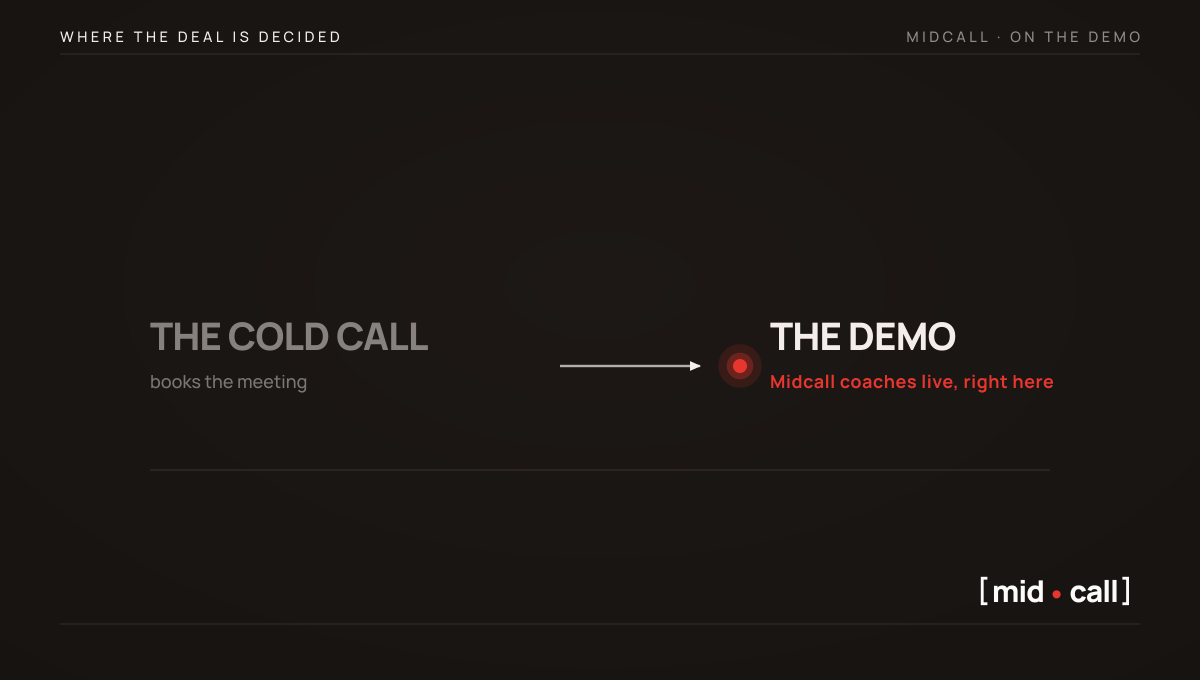
For the cold call itself, help is on the way. A version of Midcall for SDRs who cold call is coming soon, built to support them live on the call and lift their meeting-booking rate. For now, Midcall focuses on the calls that decide the deal, the demos and presentations behind the meeting a good cold call earns you.
Edward Labruyère, co-founder of Midcall. Former B2B SaaS AE, co-founder of Meteor, a B2B prospecting agency. I write about what actually happens inside sales calls, and what the best teams do about it.
Frequently asked questions
Does cold calling still work in 2026?
Yes, when it is targeted and persistent. RAIN Group's prospecting research found that 82% of buyers accept meetings at least sometimes with sellers who reach out, and senior buyers still favour the phone. Connect rates on a random list are brutal, so the difference is a good list, a relevant reason to call, and follow-through.
How long should a cold call script be?
Short. The opener should land in under thirty seconds, and the whole call usually runs three to seven minutes before a meeting is booked or the prospect is disqualified. The script fits on a page. Anything longer is a document a rep reads, not a conversation a rep has.
What should you say in the first line of a cold call?
Own the interruption and give a reason in one sentence. Admit it is a cold call, then say in a single clear line why you are calling them specifically. Skip the long pleasantries and never open with a pitch, because the opener only earns you the next thirty seconds.
How do you handle "I'm not interested" or "send me an email"?
Do not fight it. Acknowledge, then ask a short curious question that reopens the conversation, or agree to send something while keeping a concrete next step on the calendar. "Send me an email" usually means "give me an easy exit", so the move is to earn one more sentence, not to fire a brochure into a void.
Is B2B cold calling legal?
In most of Europe, business-to-business cold calling is allowed when the call is relevant to the person's job, though the rules differ by country and you should check your local ones. The GDPR frames how you collect and handle contact data. This is not legal advice, so confirm your own obligations before building a calling motion.
See the live AI coach on one of your calls.
15 minutes. We plug Midcall into a real scenario from your team, you decide.