How do you run a sales call that moves the deal forward?
A sales call that moves the deal forward follows a structure, and that structure is older than the video call. The classic canon counts seven steps, preparation, opening, discovery, pitch, objections, close and follow-up, and it still holds. What changed is everything around it. B2B deals now play out over a cycle of several scheduled video calls, in front of a buyer who arrives informed and a decision group that is rarely on the call. This guide walks through the seven steps one by one, shows how they spread across a real cycle, from the discovery call to the close, and tackles the part the step lists always skip, holding the structure live, while the conversation is happening.
What are the steps of a sales call?
The seven steps form the backbone of every sales conversation. Preparation gathers what you need to know before you speak. The opening sets the frame and the agenda. Discovery gets the prospect talking about their situation, stakes and blockers. The pitch connects your offer to what discovery revealed. Objection handling clears what still stands in the way. The close asks for a dated commitment. Follow-up locks in what was decided and sets up what comes next.
| Step | Its goal | The classic trap |
|---|---|---|
| 1. Preparation | Walk in knowing who you are talking to | Confusing it with a script to recite |
| 2. Opening | Set the frame and agenda of the call | Rushing it and losing control of the call |
| 3. Discovery | Understand the prospect's real stakes | Running through questions without hearing the answers |
| 4. Pitch | Connect the offer to what was discovered | Presenting the product instead of convincing |
| 5. Objections | Clear what still blocks | Answering on reflex without diagnosing |
| 6. Close | Get a dated commitment | Never daring to ask |
| 7. Follow-up | Lock the decision and the next step | Sending a recap and waiting |
Each of these steps deserves more than a line, and that is what this reference guide is for. The sections below take them in the order a call moves through them, and every major step routes to its dedicated guide.
What changed between the classic sales meeting and the modern B2B call?
The seven-step canon comes from a world of single meetings, one seller, one buyer, one conversation, one decision. Modern B2B changed all four variables at once, which is why reciting the steps is no longer enough.
| The classic sales meeting | The modern B2B sales call | |
|---|---|---|
| Format | One meeting, in person or by phone | A cycle of scheduled video calls |
| Buyer | To be convinced from zero | Already informed, there to validate and compare |
| Playbook | A memorized pitch | A qualification framework kept up to date |
| Decision | One person in the room | A buying group, rarely on the call |
| What you lose | The meeting | The deal, over several weeks |
Two practical consequences. First, qualification becomes a continuous thread rather than a moment, held from call to call with a framework, from BANT to MEDDIC, depending on deal complexity. Second, closing changes nature, it is no longer about signing in the room but about locking the next step on every call, all the way to the decision.
How does a sales call unfold, step by step?
A good sales call moves through five moments, and each one has its deep guide in this cluster. The opening takes a minute, agenda, time available and the outcome you are aiming for. Discovery fills the heart of the first conversation, structured questions that get the prospect talking about their stakes before any presentation, we covered it end to end in the discovery call framework.
Then comes the pitch, which is not a monologue but a handful of arguments chosen from what discovery revealed, the full method is in our sales pitch guide. Objections follow, and the first skill is reading them before answering, an objection that compares is often a buying signal in disguise, while the price objection demands a diagnosis before any answer. The call ends with the lock, restating what was said, confirming the next step and putting a date on it, our guide to closing techniques shows how to ask without pushing.
How do the steps spread across the sales cycle?
The seven steps do not fit in one call, they distribute across the cycle, and each call in the cycle has its dominant steps. This is the map the step lists never give you.
| The call | Its goal | Dominant steps | The successful exit |
|---|---|---|---|
| Discovery call | Understand and qualify | Opening, discovery | A recognized stake and a dated next call |
| Demo | Prove value on that stake | Pitch, objections | A demo tied to the stakes, not a product tour |
| Negotiation | Clear the last blockers | Objections, close | An agreement on scope and price |
| Closing call | Get the decision | Close, follow-up | A signature or a dated action plan |
Two threads run through the whole cycle. Qualification, which completes from call to call until you know who decides, on what budget and by when. And buying signals, which tell you when to accelerate, a cycle that drags is usually a cycle where those two threads were dropped, it is one of the five levers we break down to increase your close rate.
Why do reps know the steps and still skip them live?
Because knowing a structure and holding it live are two different skills. On paper, everyone knows discovery comes before the pitch. On the call, in front of a prospect who pushes or doubts, discovery gets cut short, the pitch starts too early, the closing question never gets asked. These are not knowledge failures, they are execution failures, made under pressure while attention is split between talking, listening and watching the clock.
Reading the situation makes it harder still. The same sentence from a prospect calls for opposite answers depending on what sits behind it, and reading before answering is what separates the best reps from the rest, it is the heart of the Challenger methodology. That skill builds over time, with structured coaching, which has its own reference guide, and it holds up live, during the call itself.
How does Midcall keep the steps on track during the call?
Midcall is a browser extension that coaches your reps during their calls, on Google Meet, Microsoft Teams and Zoom. Its first job is exactly the subject of this guide, holding the steps live. Qualification tracking displays during the call and updates against your team's framework, SPIN, SPICED, BANT, MEDDIC, MEDDPIC or Challenger, so the rep sees what remains to cover before hanging up. Advice cards surface the moment a step is in play, an objection to diagnose, a buying signal to lock, and the objection, challenger and closing buttons hand them the right response when they ask for it.
After the call, the score walks back through the steps one by one, framing, discovery, value selling, objections, closing, each grade backed by the exact verbatims from the call. Your rep knows which step they miss, you know what to coach, and the help personalizes accordingly, a rep who skips discovery gets supported there, not on what they already master.
Transparency first. Midcall is young, and the percentage of extra deals we don't measure yet is not something you will read here. What you can verify on your own calls within weeks is that the steps stop getting skipped, because they are held on screen while your rep listens.
Where should you start structuring your calls?
Start by mapping your own cycle. List the calls that separate a first meeting from a signature in your business, and write down the successful exit for each one, you get your own version of the table above, and every call your team takes gains a clear goal. Then pick the qualification framework that fits your sale, short cycle or complex deal, and hold it from call to call rather than once at the start.
Finally, take your last three lost deals and replay them step by step. Look for the step that got skipped, a discovery cut short, a close never asked for, a follow-up left without a date. You will know where your team loses its deals, and that is where to coach first. Everything above starts once a meeting exists. For the call that books it, our guide to writing a cold call script covers the step before.
Edward, co-founder of Midcall. Former AE, co-founder of Meteor, a B2B prospecting agency. I write about what actually happens on sales calls, and what the best teams do with it.
The complete sales call playbook
Every step of the sale has its own guide. Here is the full cluster, in the order a deal moves through them.
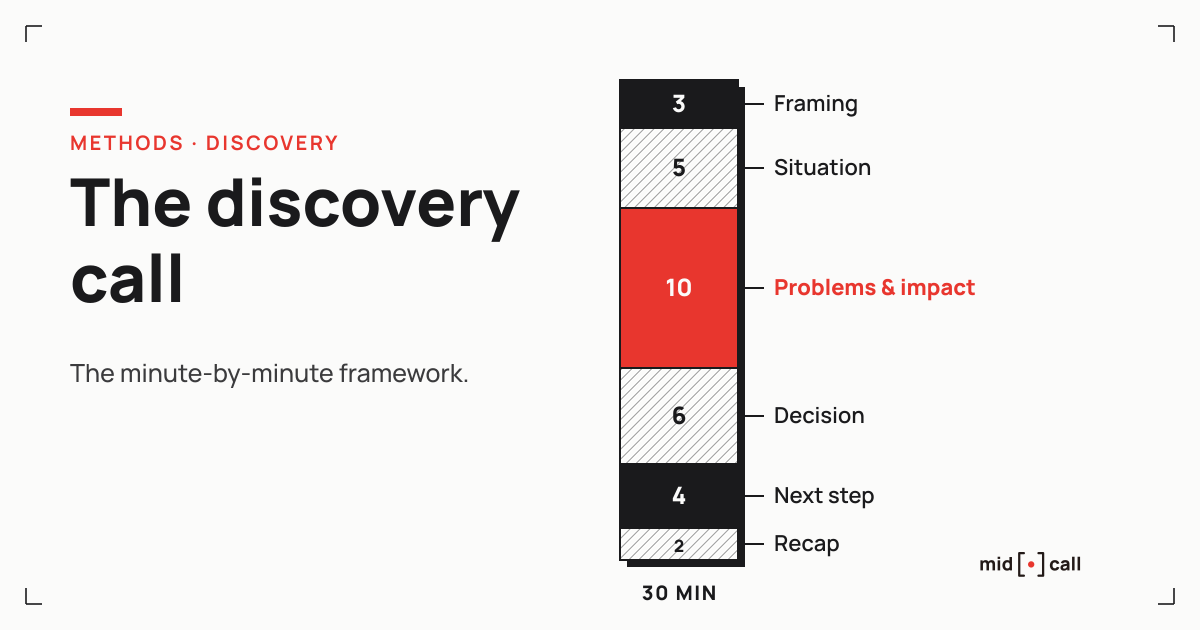 Methods7 min
How do you run a great discovery call? Framework, questions and mistakes to avoid
A great discovery call follows a six-block framework over 20 to 30 minutes: the minute-by-minute structure, the questions, the follow-ups and the rookie mistakes.
Read →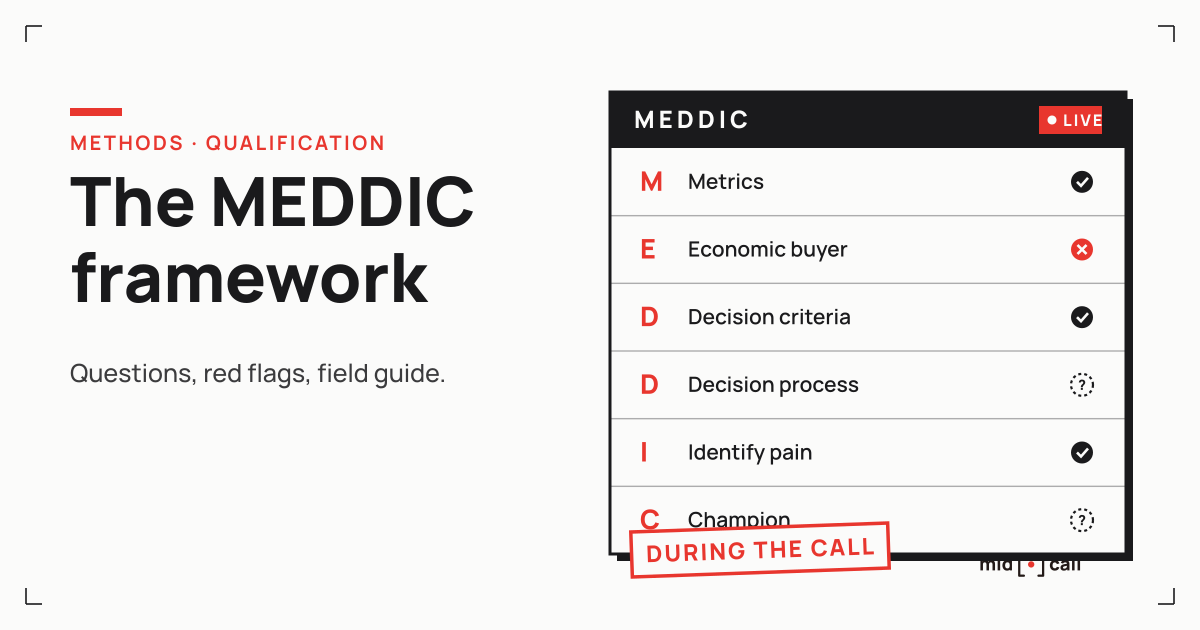 Methods7 min
The MEDDIC framework, and why qualification happens during the call
MEDDIC explained letter by letter: the exact questions to ask on a call, the red flags that expose a fragile deal, and how to roll it out across your team.
Read →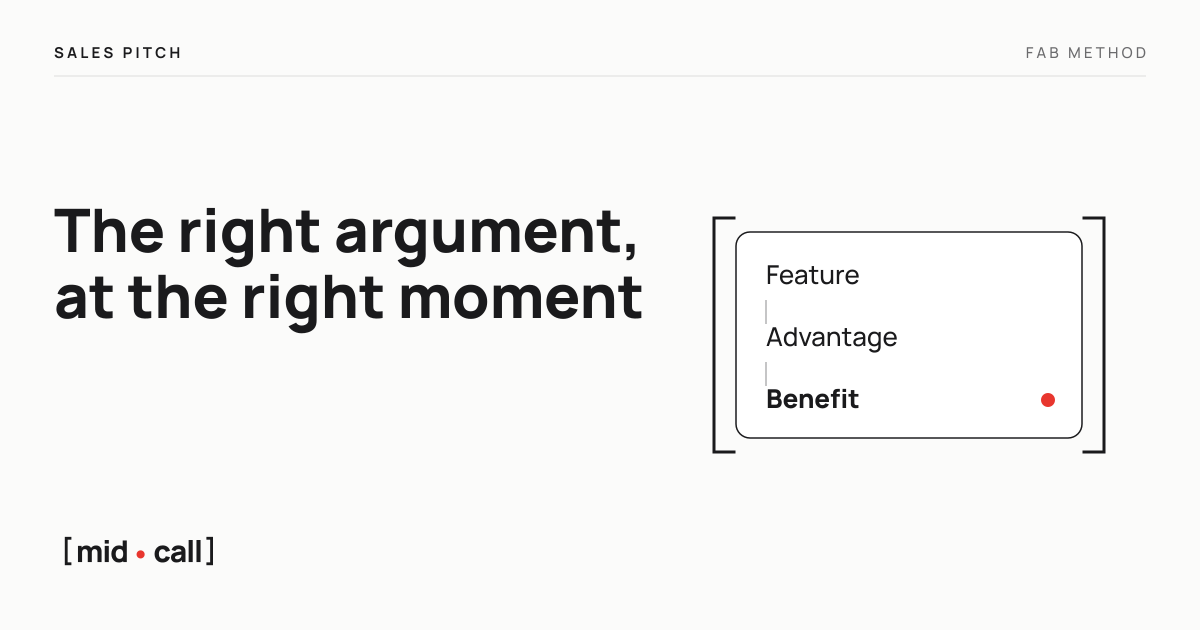 Methods6 min
How do you build an effective sales pitch?
A sales pitch isn't a script you recite, it's a set of arguments you deploy at the right moment. The FAB method, buyer tailoring, and examples.
Read → Methods7 min
What are buying signals during a sales call?
A buying signal is a phrase or question that shows your prospect is picturing life with your product. Here's how to spot and act on them live.
Read →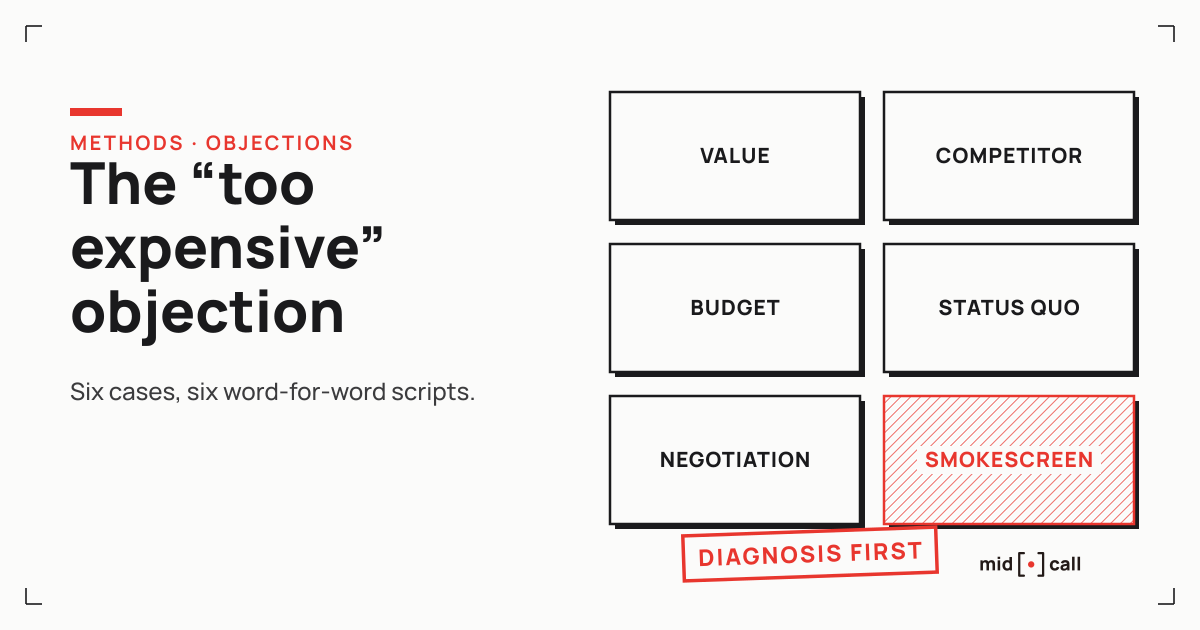 Methods10 min
How do you handle the "too expensive" price objection?
How to handle price objections, with the six cases behind "it's too expensive", the word-for-word scripts, the discount guardrails and the mistakes to avoid.
Read →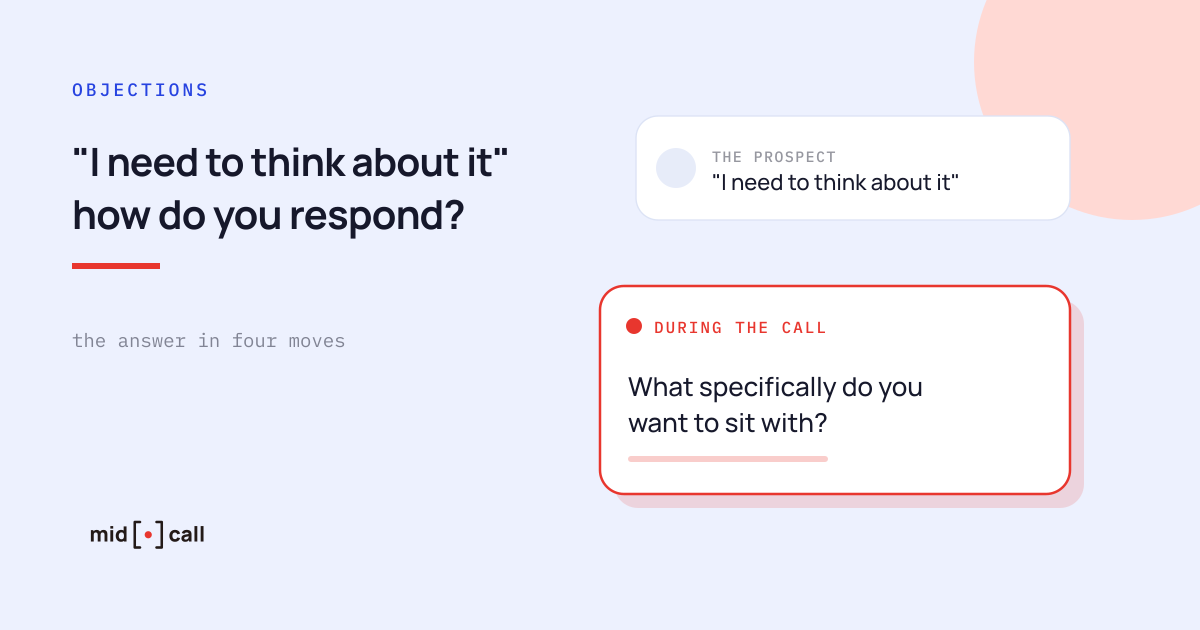 Methods5 min
How do you respond to "I need to think about it"?
How to respond to the "I need to think about it" objection, with the exact wording to use, the replies to avoid and the read by stage of the buying cycle.
Read →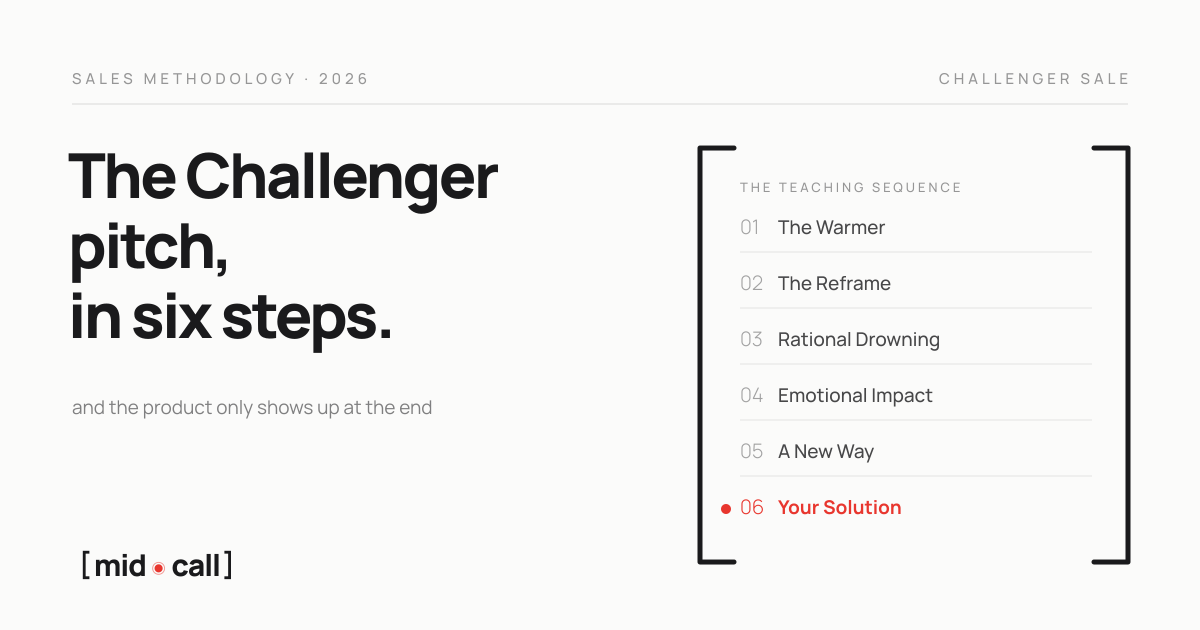 Methods8 min
How do you apply the Challenger sales methodology on real calls?
The Challenger sales methodology made applicable, the four skills, the six-step teaching pitch with a full worked example, and when it works against you.
Read →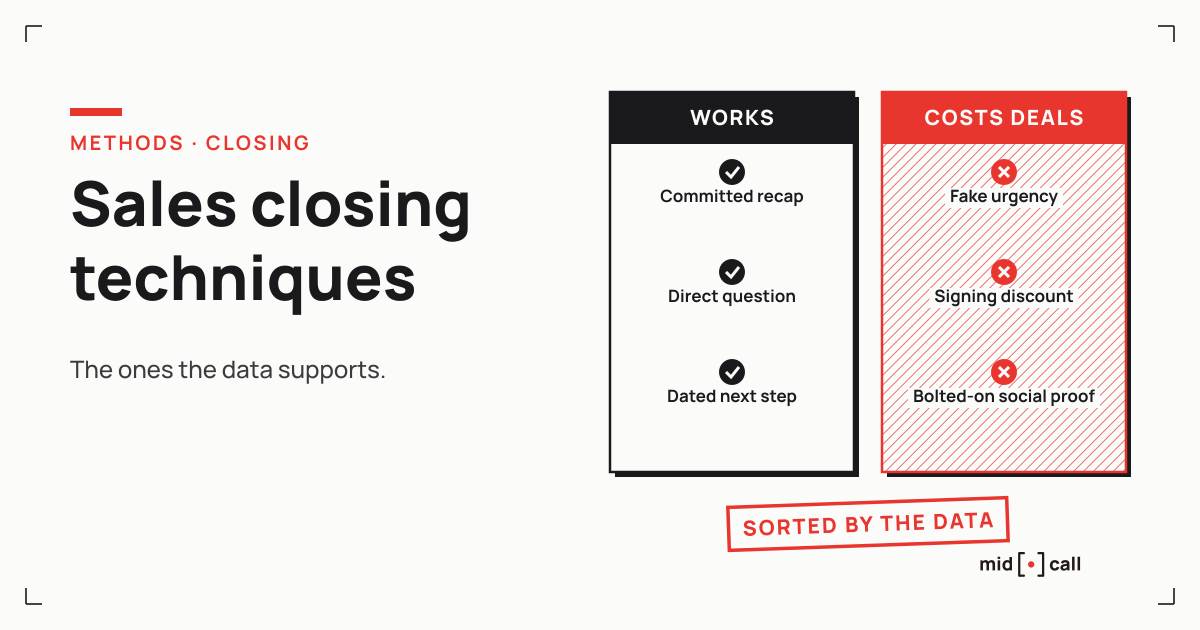 Methods7 min
Which sales closing techniques actually work? Buying signals, scripts and data
Won and lost closing calls look almost identical: the real sales closing techniques live elsewhere. Buying signals, scripts and data to close more deals.
Read → Methods9 min
How to increase your close rate: the levers that actually work in B2B
How to close a deal in B2B, the six-step sequence, the five levers that lift your close rate, and what changes on a deal with several decision-makers.
Read →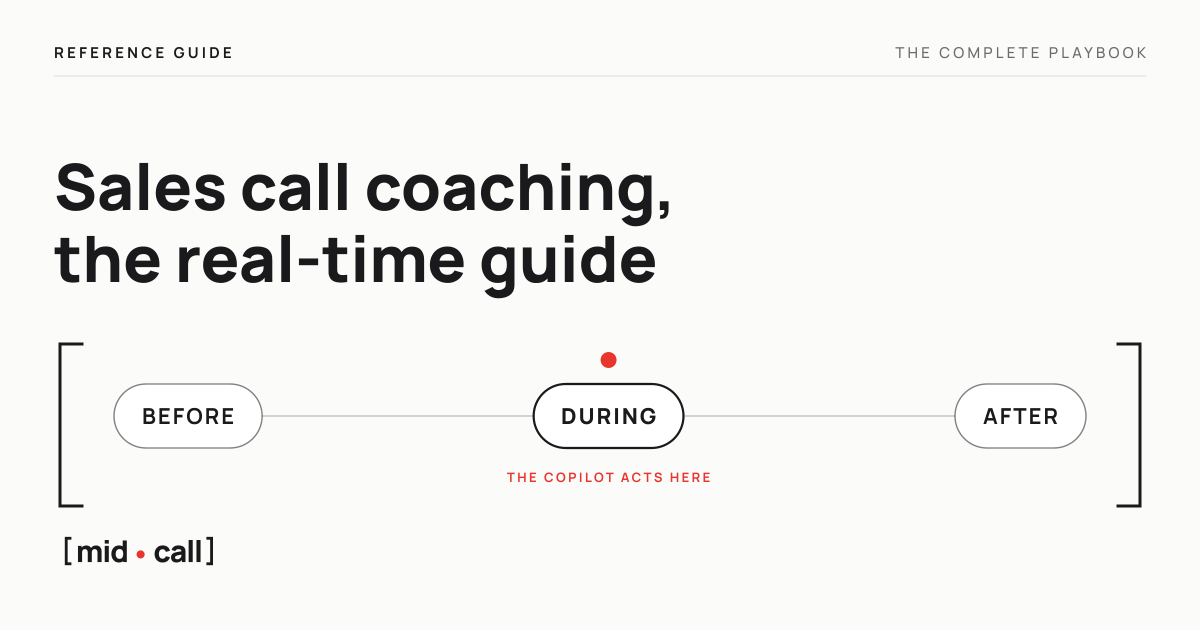 Guides14 min
Sales Call Coaching in Real Time: The AI Coach That Helps Your Reps Mid-Call
Sales call coaching that works in real time: an AI sales coach helps your reps during the call, not after. Objections, buying signals, ramp time, GDPR.
Read →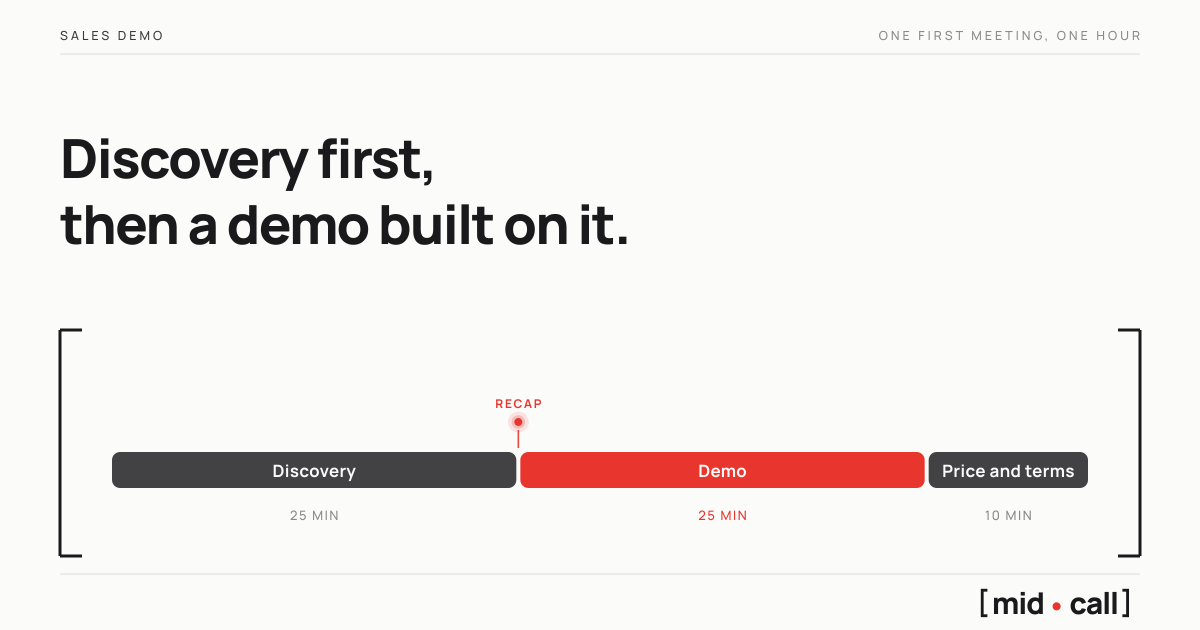 Guides9 min
What is a sales demo, and how do you conduct one?
What a sales demo is, why it follows discovery in the same call, how to prepare and run it step by step, then move to pricing and book a dated next step.
Read →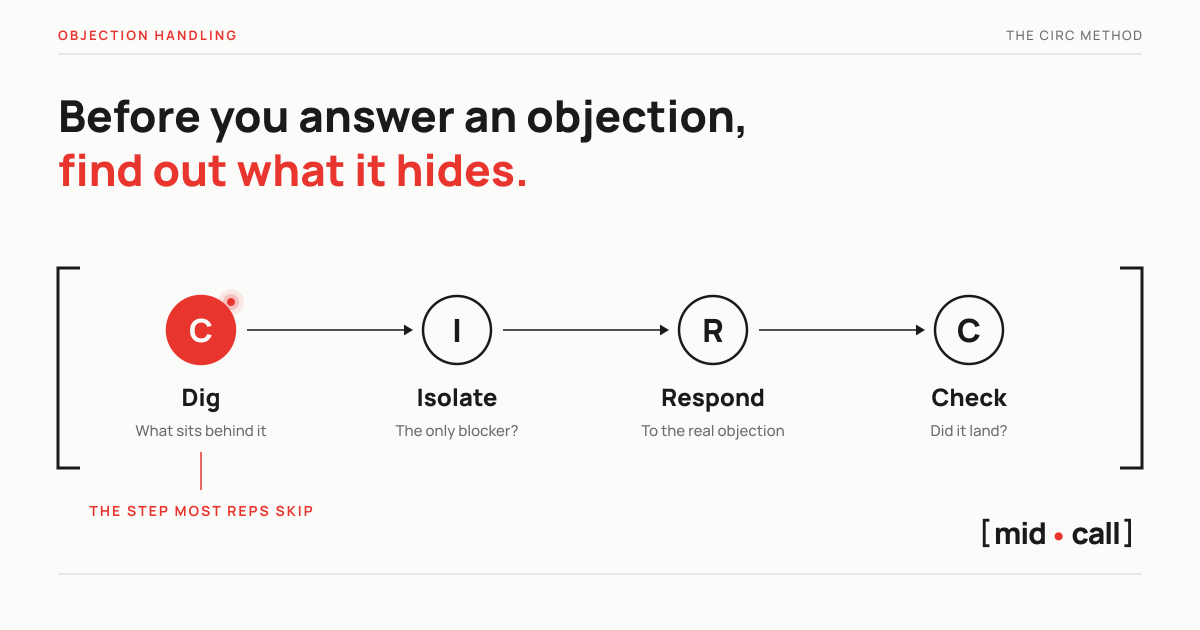 Methods9 min
How do you handle objections in sales, with real examples?
How to handle sales objections with the CIRC method, the 12 most common B2B objections and what to ask first, plus the mistakes that cost you the deal.
Read →
Frequently asked questions
What are the steps of a sales call?
The seven steps of a sales call are preparation, opening, discovery, pitch, objection handling, close and follow-up. They structure every sales conversation, and in B2B they usually spread across a cycle of several calls rather than a single meeting.
How do you structure a sales call?
Open with a one-minute frame, agenda, time available and the outcome you are aiming for. Spend the heart of the call on discovery before any pitch, connect your arguments to what discovery revealed, handle objections by diagnosing before answering, and never hang up without restating what was said and dating the next step.
How do you start a sales call?
Start with the frame. Confirm the time available, propose an agenda, and state the outcome you both want from the call. It takes a minute, it signals professionalism, and it gives you a legitimate way to steer the conversation back on track later. Small talk is fine, but the frame is what earns you control of the call.
What is the most important step of a sales call?
Discovery. It conditions every other step, a pitch only lands on stakes that were uncovered, an objection can only be read in the light of what the prospect revealed, and a close only works on a recognized need. A call where discovery got skipped rarely recovers.
Should all the steps happen in one call?
Rarely in B2B. The steps spread across the cycle, discovery dominates the first call, pitch and objections dominate the demo, close and follow-up dominate the final calls. What must happen on every call is a clear opening and a locked, dated next step at the end.
Can software track the steps during a live call?
Yes. A call copilot like Midcall displays qualification tracking live against the team's framework, prompts the right response when an objection or a buying signal lands, and scores each step after the call with the exact verbatims. The structure holds without the rep having to think about it while listening.
See the live AI coach on one of your calls.
15 minutes. We plug Midcall into a real scenario from your team, you decide.