How do you manage a sales team that performs?
A sales team that wins is a system that runs, not a manager who pushes. The system holds in five blocks, hiring, structure, performance, cadence, coaching, and each block has its dedicated guide on this page. Most content about sales team management stops at posture and motivation. This one reaches down to where deals are actually won, the calls.
What is sales team management?
Sales team management is the set of practices that turns individual reps into a team that hits its revenue targets. It covers five complementary blocks, and weakness in any one of them caps the whole team. A bad hire costs months, a fuzzy structure dilutes ownership, blind piloting discovers problems at the lost close, a missing cadence leaves every rep alone with their pipe, absent coaching freezes skill levels where they are.
| The block | Its job | The dedicated guide |
|---|---|---|
| Hiring | Find people who sell, not resumes that shine | Hiring your first sales rep |
| Structure | Give everyone a clear role and territory | The types of sales reps |
| Performance | See what is real, act before quarter end | Performance and dashboard |
| Cadence | Make the team exist every week | The sales coaching cadence |
| Coaching | Grow each rep on their weak points | Sales call coaching |
The rest of this guide takes the blocks in the order a manager builds them, and spends extra time on the one almost everyone pilots badly, performance, because it gets read in the wrong place.
What are a sales manager's responsibilities?
A sales manager's responsibilities fit in one sentence, deliver the number with the team, not instead of it. Concretely, a good manager's week splits between piloting the pipe, running team rituals, holding one-on-ones, listening to and debriefing calls, hiring as the team grows, and protecting the team inside the company. What should not be on the list, and yet eats most calendars, is closing your reps' deals for them, a manager who sells in their place has given up on growing them.
The classic trap of the role is well known, the best rep gets promoted and keeps doing what they know, selling, instead of learning a different job, making others sell. That job starts with knowing each rep's profile, so the support fits the person instead of imposing your own way of selling.
How do you structure and staff a sales team?
Hiring is the block where every mistake costs the most, a bad sales hire is paid for in months of salary and lost deals before it becomes visible. Our guide to hiring your first sales rep lays out the method, and it holds for every hire after the first, look for proof of selling rather than years of experience, test in real conditions, and never hire a VP of Sales before the founder has sold the product themselves.
Structure comes next, who prospects, who closes, who manages accounts. In SaaS, the SDR, AE and AM split imposes itself as the team grows, and the real question is not the org chart but clarity, every rep must know what number they own and on what territory. A balanced sales team structure also mixes seller profiles rather than cloning the best performer.
How do you manage sales team performance without micromanaging?
By piloting through the calls, not the CRM alone. Most managers' reflex is to pilot from the CRM dashboard, pipeline, conversion rates, forecast. Those numbers are indispensable, and they arrive too late, a close rate that drops records a problem born weeks earlier, on the calls, a rushed discovery, a price objection handled on reflex, a close never asked for.
| Piloting by CRM alone | Piloting through the calls | |
|---|---|---|
| What you see | Outcomes, once they are locked in | Causes, while there is still time |
| When you catch a problem | At the lost close | At the step that produces it |
| The coaching that follows | Generic, by gut feel | Aimed at the exact skill involved |
| The cost to the manager | Low, but blind | Hours of replays, without tooling |
The right-hand column has a cost, and that is exactly what the tooling block of this system exists to solve. Our guides to sales performance management and the sales dashboard detail the indicators that matter, and the golden rule fits in one line, a KPI only earns its place if it triggers an identified coaching action.
How do you run the team week to week?
The cadence is the block that makes the team exist, without it every rep is alone with their pipe. The base holds in three rituals, a short, rhythmic team weekly that covers the pipe and one skill, regular one-on-ones that belong to the rep more than to the manager, and deal reviews that put the team to work on live opportunities. Our guide to the sales coaching cadence gives the full rhythm, with the weekly agenda and the one-on-one template.
Your reps execute the steps of a sales call in their conversations, the cadence is where the team learns collectively from what happens there, a won call gets shared, a lost call gets dissected, and skill circulates instead of staying with the best.
How do you coach your team's sales calls?
Coaching is a system of its own, and we dedicated a full reference guide to it. At the management level, three decisions are enough. Decide when coaching happens, before the call through practice, during through a copilot, after through review. Decide what to coach for each rep, one skill at a time, identified from their calls rather than from impressions. And equip the review, call recording provides the raw material, provided you know what to look for in it.
How does Midcall equip the sales manager?
Midcall gives the manager what the CRM cannot show, the reality of the calls, without the hours of replays. Every call by every rep produces a structured report, a global score and a score per skill, framing, discovery, value selling, objections, closing, with the exact verbatims behind each grade, the objections met and the rep's actual response, talk time and monologues. The dashboard aggregates by rep and by period, strengths, recurring weaknesses, frequent objection families, score trends over time. You know objectively where to coach each rep, without relying on the impression left by the last call you happened to join.
And during the call itself, every rep is backed by the copilot, which personalizes its help to each rep's weaknesses, a junior who struggles on objections gets supported there, where your senior does not need it. The system in this guide then runs on a short loop, the call feeds the diagnosis, the diagnosis aims the coaching, the coaching gets verified on the next call.
A commitment rather than a promise. Midcall is young, and the improvement percentages we do not measure yet will not appear on this page. What you can see within the first weeks is a manager who knows precisely where to coach each rep, evidence in hand, without having replayed a single call end to end.
Where should you start?
With an honest three-question audit. Do you know, evidence in hand, where each of your reps loses their deals, if the answer comes from your impression rather than their calls, the performance block is your first project. Do your rituals actually exist, a weekly that skips every other week does not exist, that is the cadence block. And was your last hire decided on proof of selling or on a good interview, that is the hiring block.
Take the weakest block, fix it with its dedicated guide, then move to the next. A system gets built block by block, not all at once. And when a new rep joins, the ramp has its own guide, sales onboarding, now part of this cluster.
Edward, co-founder of Midcall. Former AE, co-founder of Meteor, a B2B prospecting agency. I write about what actually happens on sales calls, and what the best teams do with it.
The complete sales team management playbook
Every block of the system has its own guide. Here is the full cluster, in the order a manager builds it.
 Guides7 min
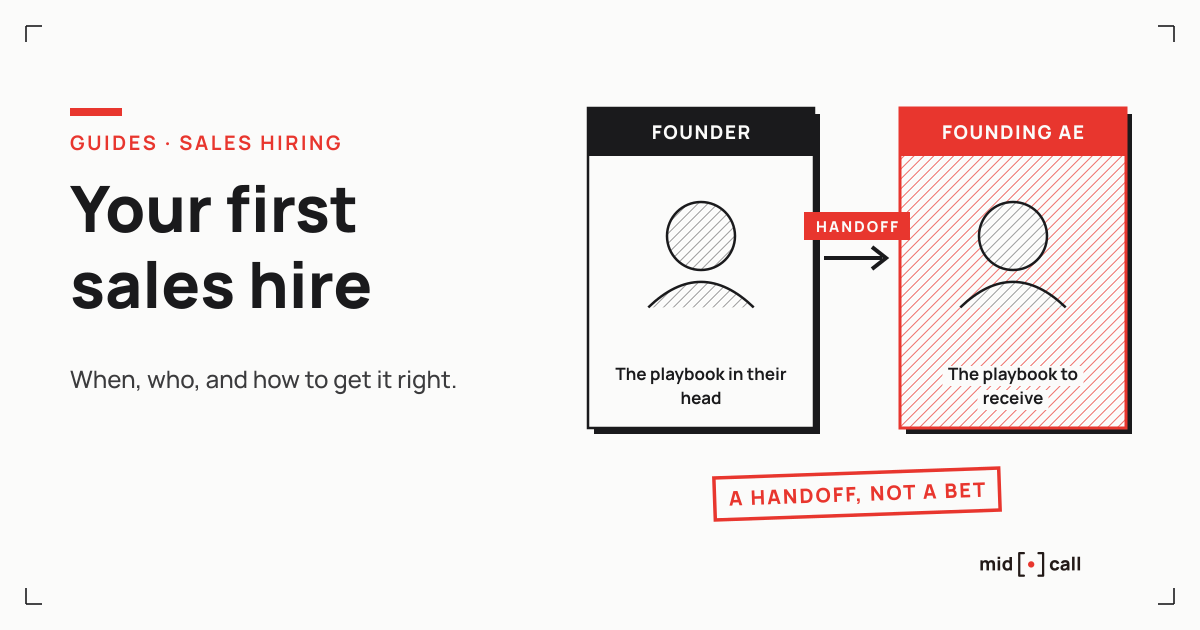
When should you make your first sales hire, and how do you get it right?
Your first sales hire is decided before the job post. The three proofs to gather, the founding AE profile, the classic casting mistakes and the first 90 days.
Read →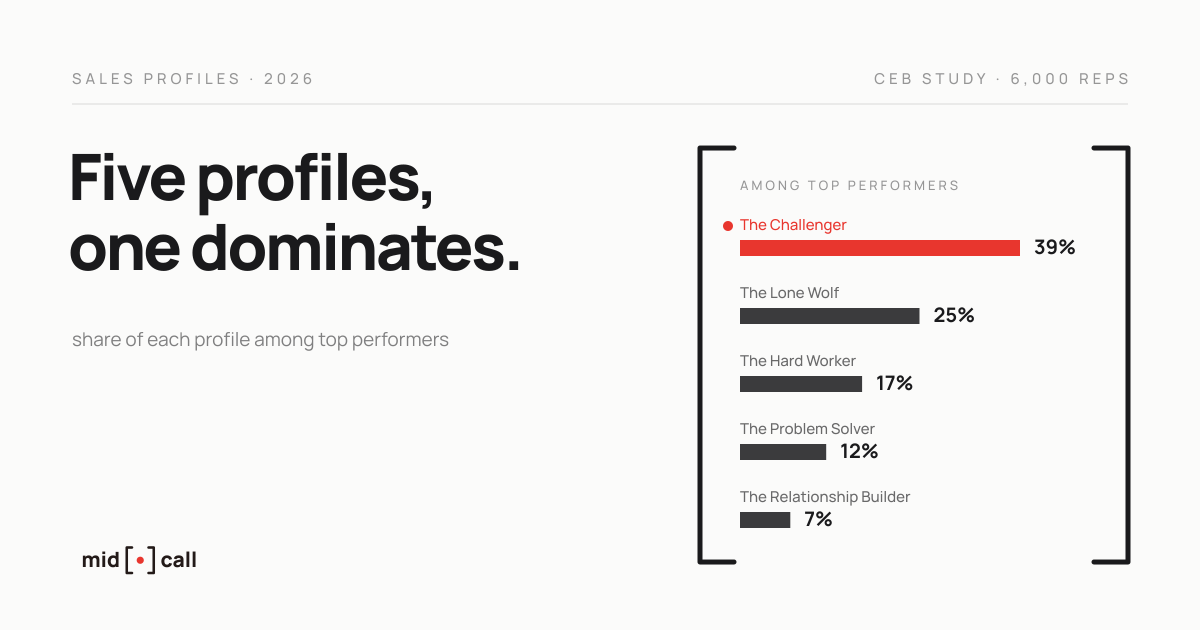 Methods7 min
What are the different types of sales reps, and which one performs?
The five sales rep profiles from the CEB study, their strengths and weaknesses, the full breakdown, and which profile wins depending on your type of sale.
Read →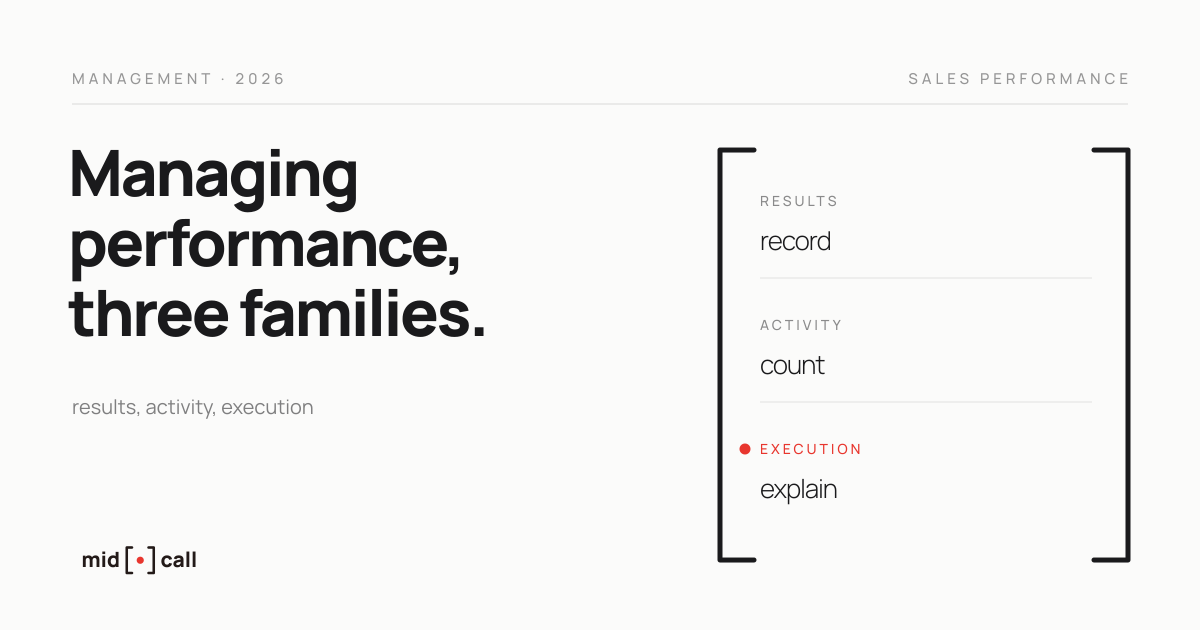 Guides7 min
How do you manage sales performance in 2026?
Sales performance management in 2026, the three families of indicators, the KPIs that matter, the tool stack and the routine that makes a team improve.
Read →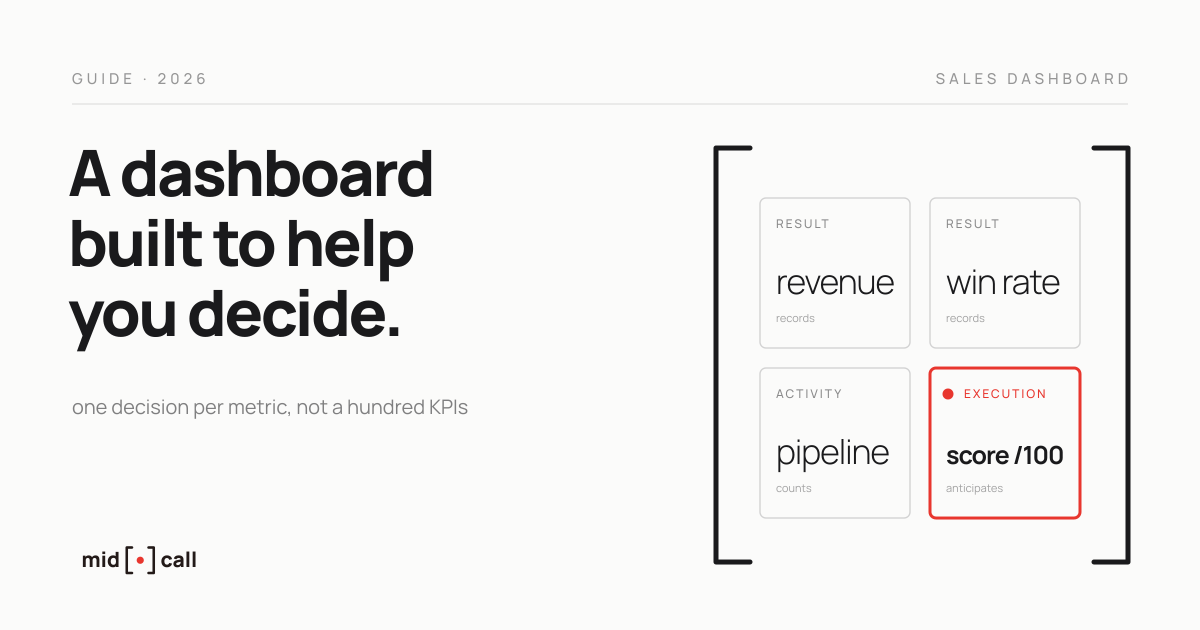 Guides6 min
How do you build a sales dashboard that works?
Building a sales dashboard in 2026, the KPIs that matter, the tools from native CRM to flexible base, and the one line almost every dashboard leaves out.
Read →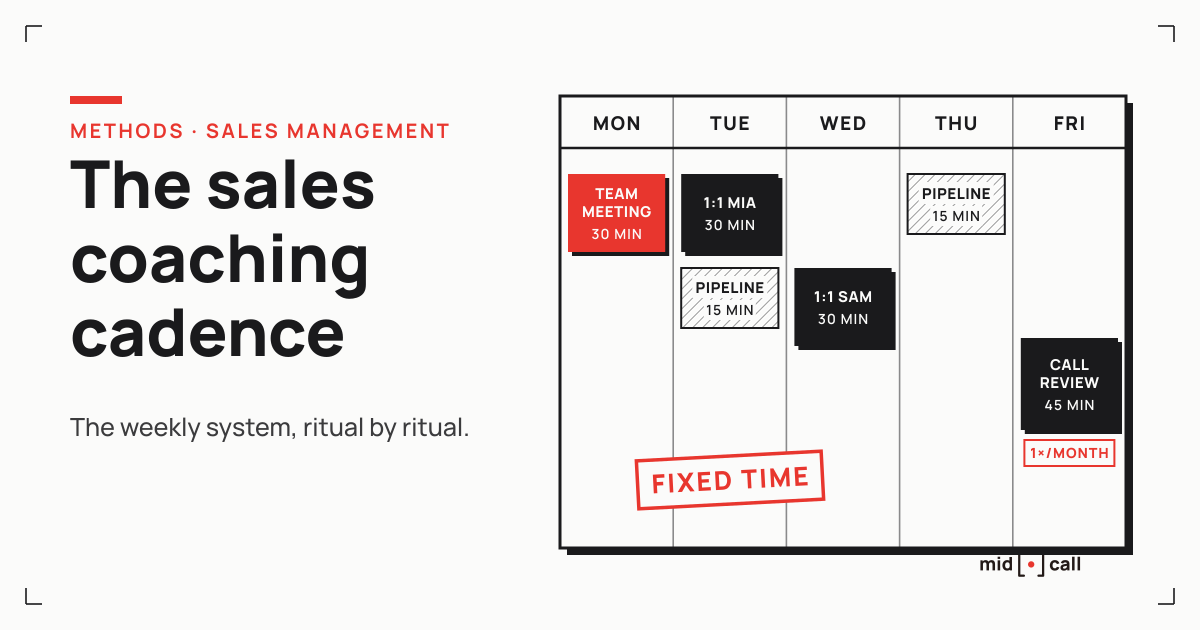 Methods8 min
The sales coaching cadence top sales leaders run every week
The complete sales coaching cadence: weekly 1:1s, a 30-minute team meeting, separate pipeline reviews and monthly call reviews, with minute-by-minute agendas.
Read →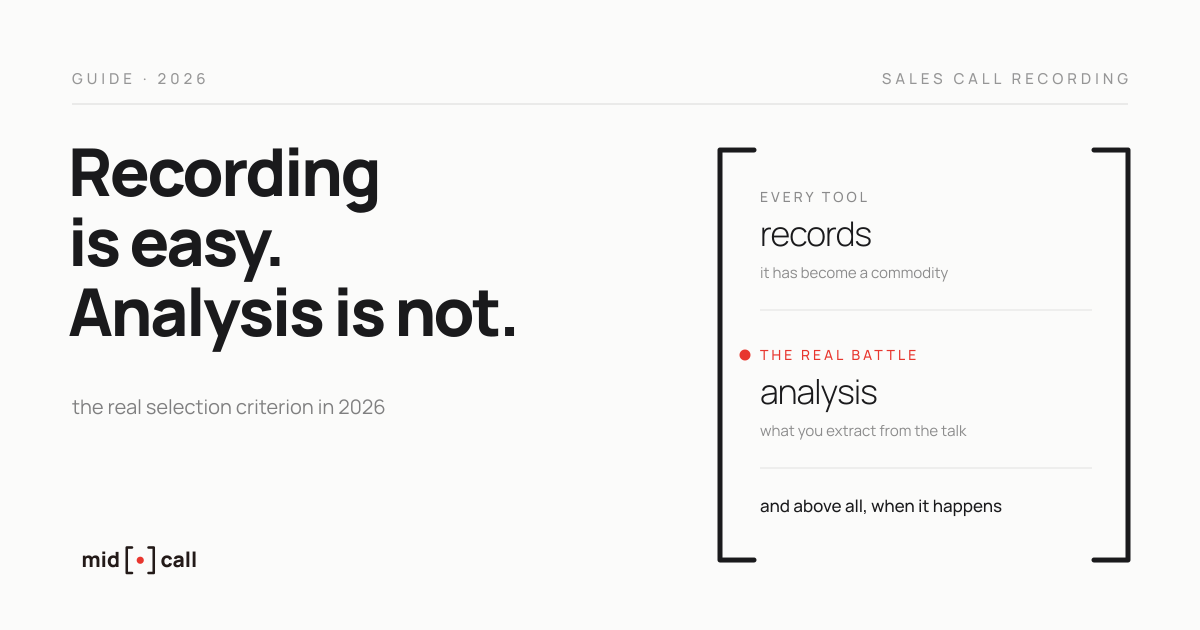 Guides5 min
How do you choose sales call recording software?
How to choose sales call recording software in 2026, the criteria that matter, why recording is no longer the differentiator, and where live analysis fits.
Read →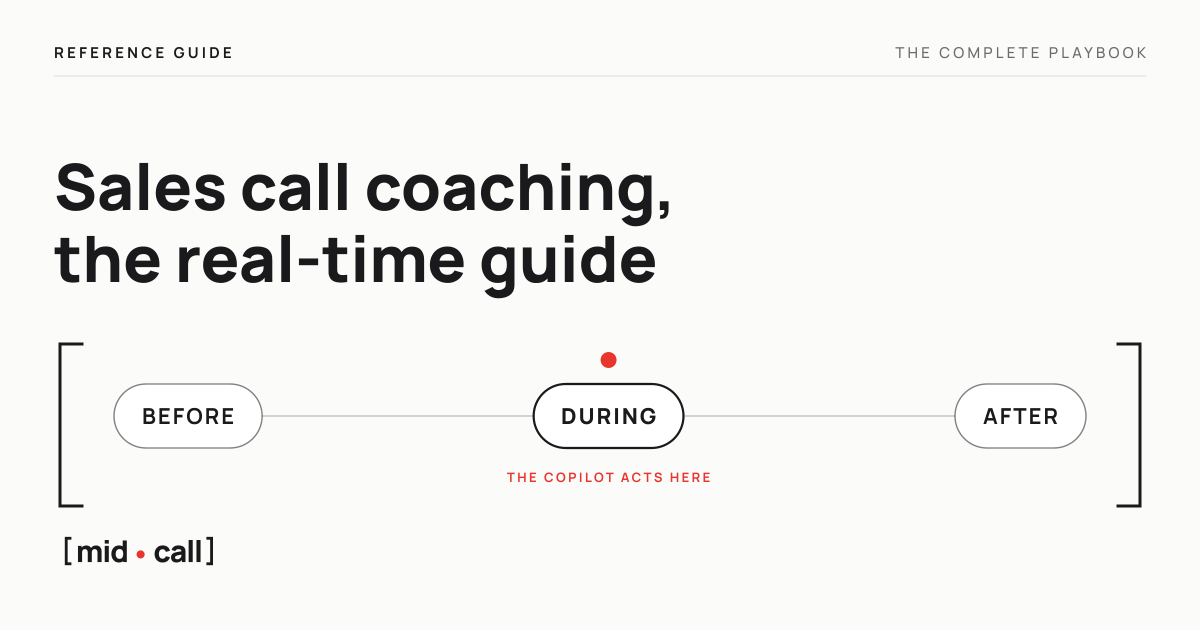 Guides14 min
Sales Call Coaching in Real Time: The AI Coach That Helps Your Reps Mid-Call
Sales call coaching that works in real time: an AI sales coach helps your reps during the call, not after. Objections, buying signals, ramp time, GDPR.
Read →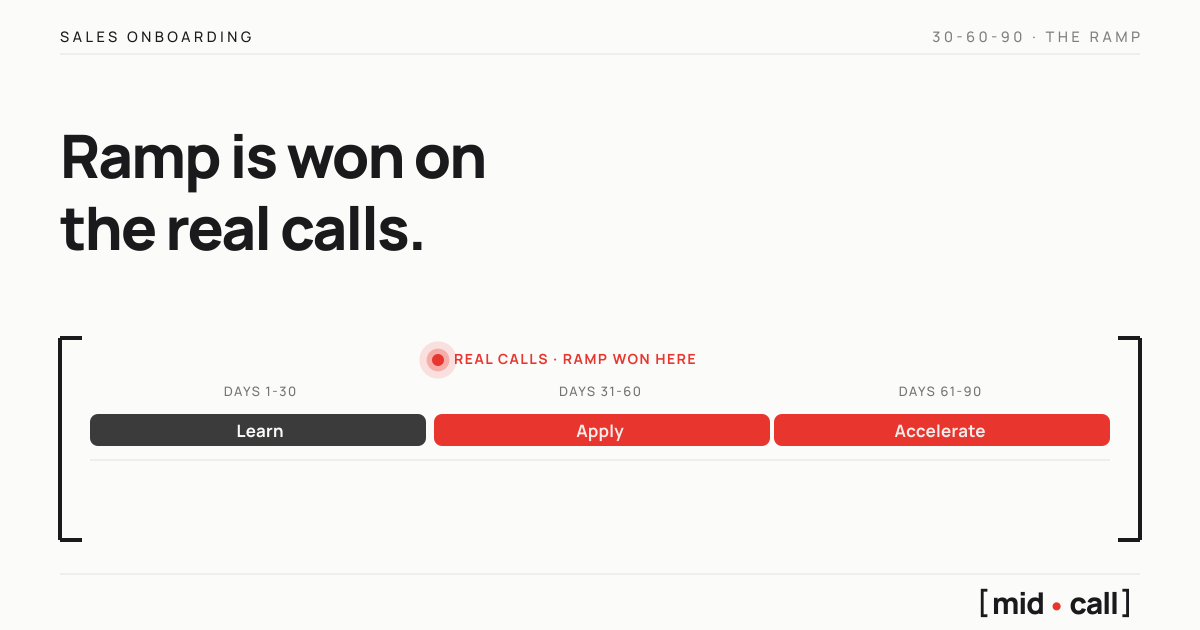 Guides6 min
What is sales onboarding, and how do you ramp reps faster?
Sales onboarding is the 30-60-90 day ramp for new reps. The plan, the mistakes that keep ramp slow, and why ramp is really won on the first real calls.
Read →
Frequently asked questions
What is sales team management?
Sales team management is the set of practices that turns individual reps into a team that hits its revenue targets. It covers five blocks, hiring the right profiles, structuring roles, piloting performance, running the weekly cadence and coaching skills, and weakness in any single block caps the whole team.
What are the responsibilities of a sales manager?
Delivering the number with the team, not instead of it. The role covers piloting the pipe and performance, running team rituals and one-on-ones, listening to and debriefing calls, hiring, and protecting the team inside the company. Closing deals in place of the reps is not on the list, it is the classic trap of the best seller promoted to manager.
How do you manage a sales team day to day?
With short rituals that actually hold, a team weekly covering the pipe and one skill, regular one-on-ones, deal reviews. A good manager's routine alternates piloting by indicators and coaching aimed by the calls, one skill per rep at a time.
What is the difference between managing and coaching a sales team?
Management is the full system, hiring, structure, performance, cadence, coaching. Coaching is one block of it, the one that grows each rep's skills, before the call through practice, during through a copilot, after through call review. A manager can delegate part of the coaching, never the system.
What KPIs should a sales manager track?
Outcome indicators, pipeline created, conversion rate per stage, close rate, ACV, and cause indicators that live in the calls, discovery quality, objections met and handled, next steps locked. The golden rule, a KPI only earns its place if it triggers an identified coaching action.
What tools help manage a sales team?
A CRM for pipe and forecast, a call review tool for the raw material of coaching, and a copilot like Midcall for the per-rep, per-call picture, skill scores, frequent objections, trends over time, with live, personalized help for every rep during their calls.
See the live AI coach on one of your calls.
15 minutes. We plug Midcall into a real scenario from your team, you decide.